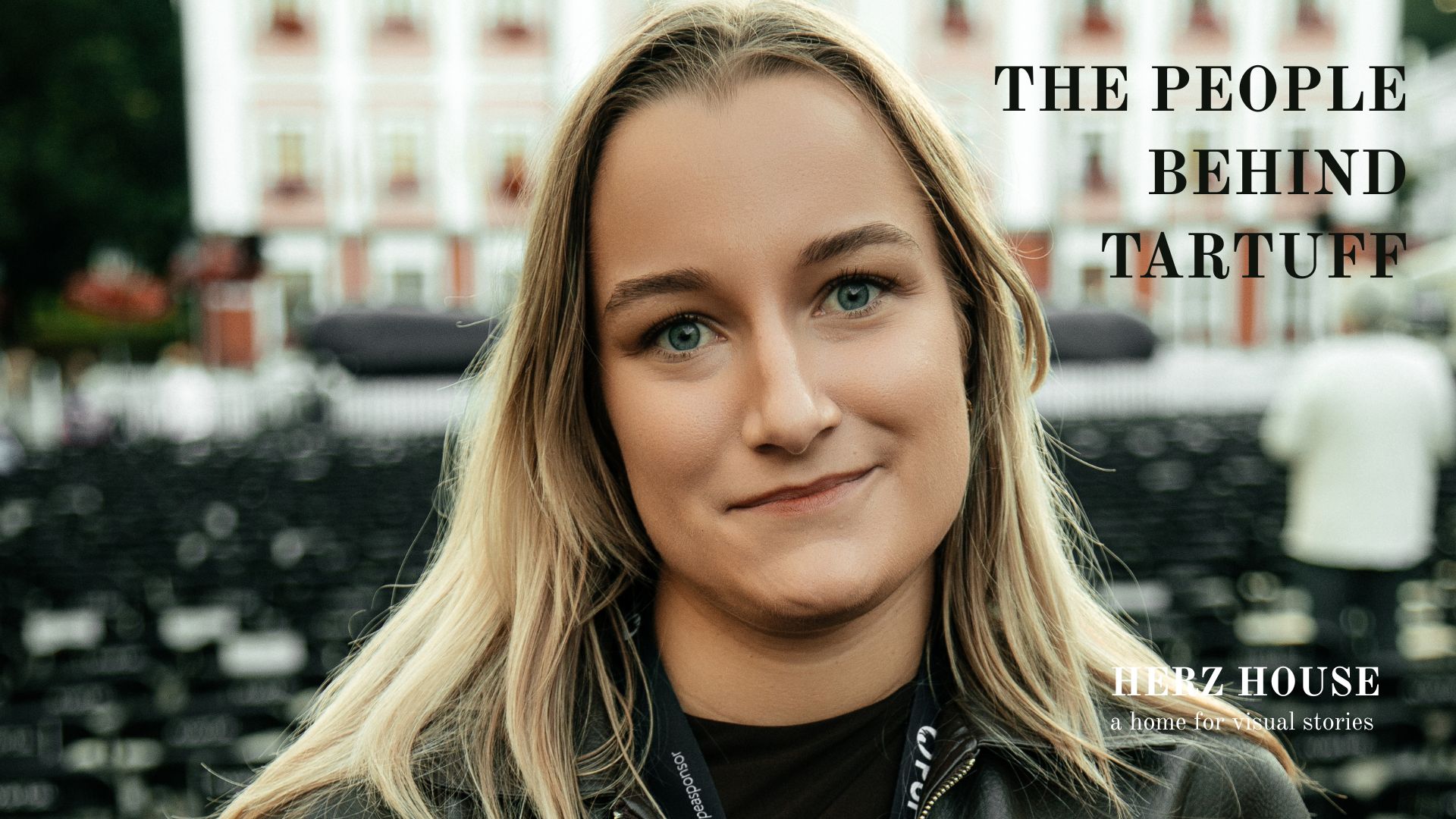
KATARIINA KOEMETS: THE PEOPLE BEHIND TARTUFF
On the festival family, the invisible work behind the scenes, and the cinema that opens new windows onto the world.
Anna Viaznikova | HERZ HOUSE
Worlds
Projects
Every film festival has two sides. The first is what the audience sees: films, a big screen, a summer evening, and the anticipation of a story that will transport them into another reality for a few hours. The second remains behind the scenes. It is the preparation, the organisation, the countless small tasks, and the people who make everything happen.
For Katariina Koemets, who first joined Tartuff as a volunteer and later spent two years leading its volunteer team, these two sides of the festival are inseparable.
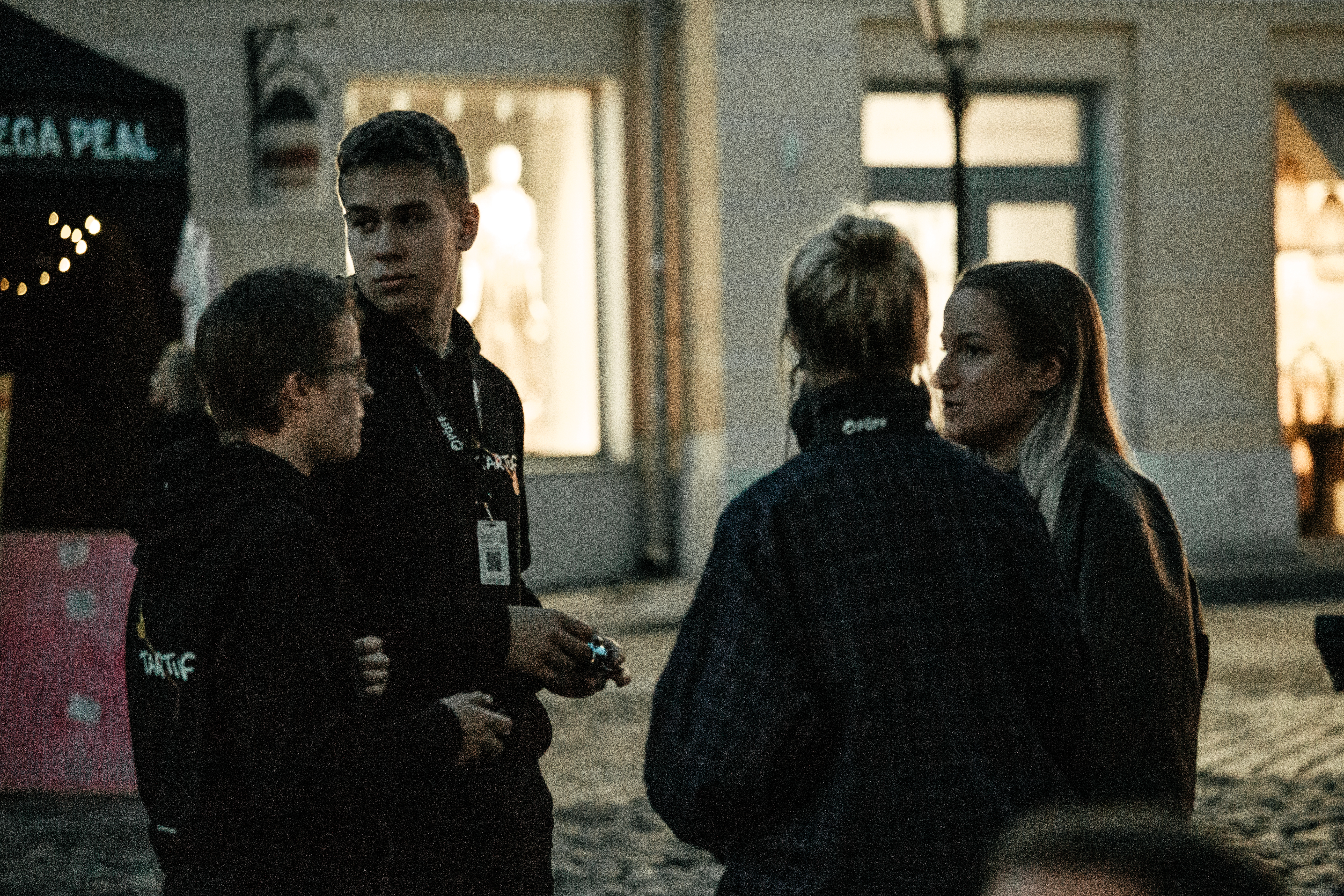
She knows how much effort goes into what might seem like a simple August evening in Tartu’s Town Hall Square. While audiences take their seats and prepare to watch a film, someone is arranging chairs, welcoming visitors, helping organise events, and dealing with the many details that rarely enter the audience’s field of vision. It is these seemingly small contributions that shape the festival experience.
But work is only part of what brings people back.
For Katariina, Tartuff has long been more than an event in the summer cultural calendar. It is a meeting place for people united by their love of cinema, an opportunity to spend time together, and a space where a sense of belonging can grow. The team, volunteers, and audience gradually become part of one extended family.
“It is one of the most important parts of Tartu’s summer,”
Katariina says of a festival that brings people together on August evenings year after year.
That connection does not end with the final screening. Relationships formed during the festival continue throughout the year. Volunteers return, audiences come back, and encounters gradually turn into friendships. Perhaps this ability to create a lasting community is what makes Tartuff more than a succession of film screenings.
Yet the festival’s significance for Katariina goes beyond its people and atmosphere. The films themselves, and the experiences they offer, matter just as much.
Cinema allows us to look into lives we might never encounter in our own experience. Different countries, circumstances, decisions, and human emotions become more accessible, even when thousands of kilometres or vastly different life experiences separate us from the people on screen.
“It opens different windows and broadens our horizons,”
Katariina explains, describing how films introduce us to stories and experiences beyond the boundaries of our own world.
This is one of cinema’s most powerful possibilities: it does not necessarily provide answers, but it helps us see more. Sometimes another person’s story challenges our assumptions. Sometimes it creates a sense of connection with someone whose life is entirely different from our own. And sometimes it simply reminds us how much exists beyond the familiar boundaries of our everyday lives.
For Katariina, this interest extends beyond the experience of watching films and has become part of her professional aspirations.
Alongside her involvement in the cultural field, she is pursuing a master’s degree in psychology and is interested in how people perceive cinema. She is drawn to the space where scientific research meets filmmaking — an area she believes deserves much greater attention in Estonia.
Why do certain stories move us more than others? How do viewers interpret what happens on screen? What shapes our emotional responses, and why can the same film leave different people with entirely different impressions?
These questions open up a perspective in which cinema becomes not only an art form but also a way of exploring human perception.
Katariina hopes to help develop this field in Estonia. For her, it is an opportunity to combine her interest in psychology with her love of cinema and perhaps contribute to an area that remains relatively underexplored.
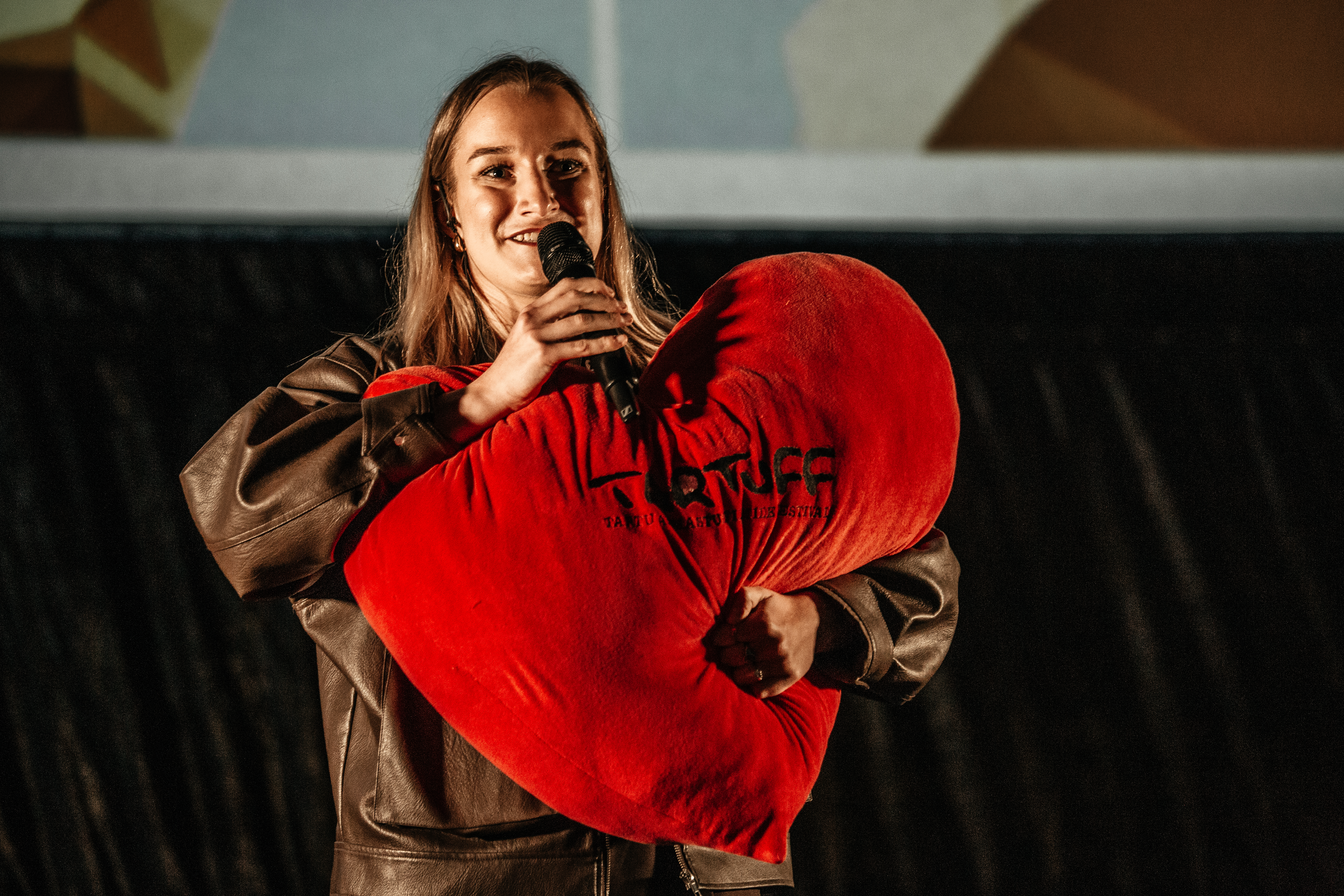
There is a certain logic to this connection. A festival that introduces people to different stories can inspire not only its audiences but also those who help bring it to life. It can remind people why they chose to work in culture, where the energy for new projects comes from, and how collective enthusiasm can become something greater than the sum of individual efforts.
Tartuff comes to an end when the screen goes dark and audiences disperse into the August streets of Tartu. But for those who become part of the festival family, the story does not end there. What remains are the people, the conversations, the new ideas, and the desire to return the following summer.
Perhaps this is one of the festival’s greatest strengths: it brings people together not only through cinema, but also through the possibility of seeing the world a little more broadly.