HEINRICH SEPP: STORIES THAT HELP US SEE EACH OTHER
Heinrich Sepp is the Marketing and Communications Coordinator at PÖFF and also works with the TARTUFF festival.
Anna Viaznikova | HERZ HOUSE
From Childhood Fascination to Film Festivals
As a child, Heinrich was captivated by animation and films. He remembers watching Disney cartoons on VHS tapes and the particular feeling they left behind.
““There has always been something captivating about it.””
Initially, Heinrich wanted to become an animator and planned to study animation at the Estonian Academy of Arts. However, the academy was not admitting undergraduate students that year, so he pursued another path. He enrolled at BFM, where he studied film directing for three years.
His childhood fascination gradually developed into a professional interest in cinema. But studying directing does not necessarily mean spending a lifetime making films.
““There has always been something captivating about it.””
Still, he has not entirely ruled out the possibility of getting behind the camera one day. If he were to make a film, it would probably be a romantic comedy. There is a lightness to this answer that reminds us that even a serious conversation about cinema can leave room for playfulness, imagination, and the simple pleasure of a good story.
Between the Filmmaker and the Audience
Making a film and working at a film festival require different approaches. The first is a collective creative process in which many people work together to bring an idea to life. The second is about helping a film find its audience.
For Heinrich, one of the main differences lies in responsibility.
“Making a film is a major team effort, with a great deal of artistic responsibility,” he explains.
At a festival, that responsibility takes a different form. It extends not only to filmmakers who entrust their work to the organisers, but also to the audiences who come to watch it. A festival becomes a space where different expectations, perspectives, and ways of experiencing cinema meet.
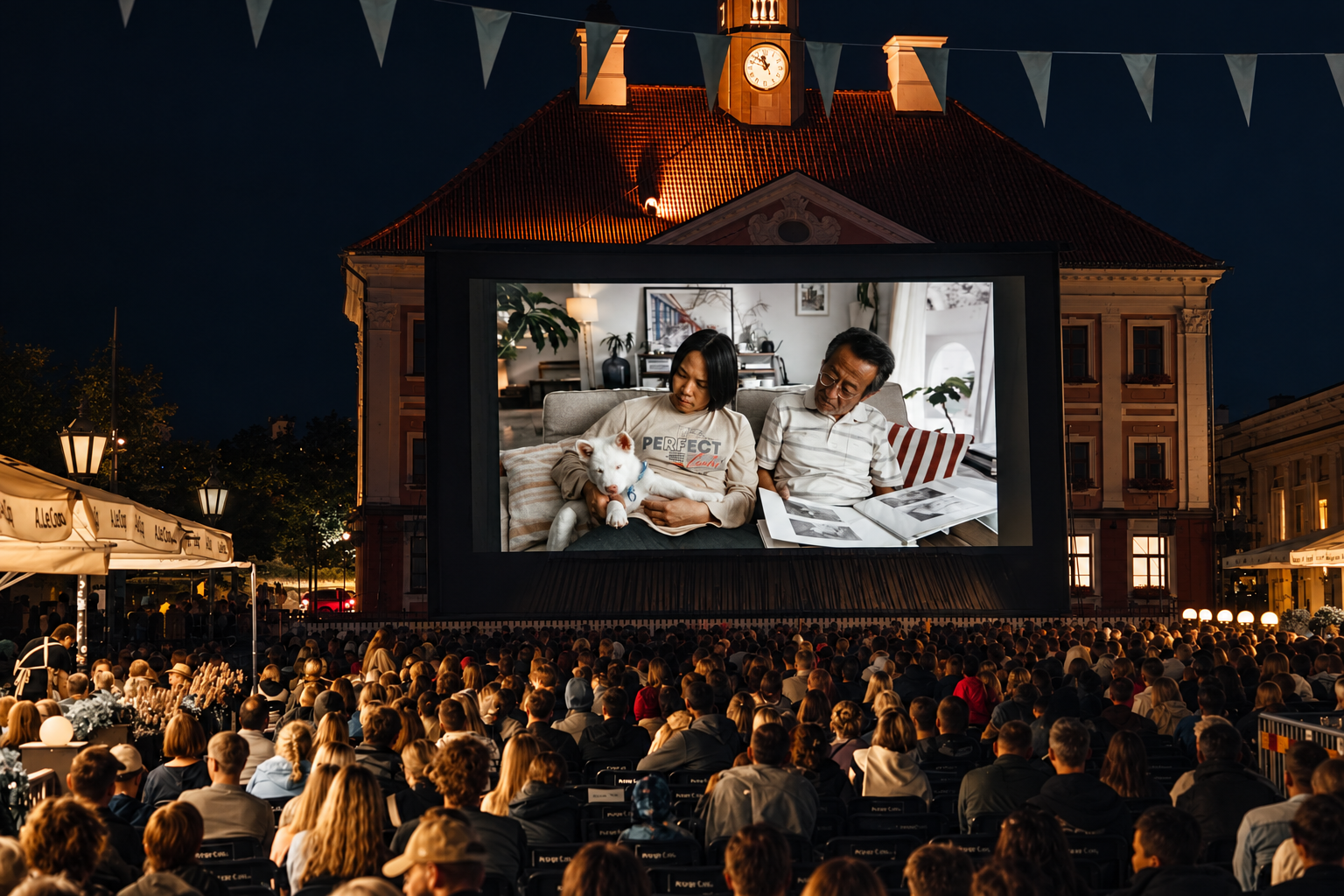
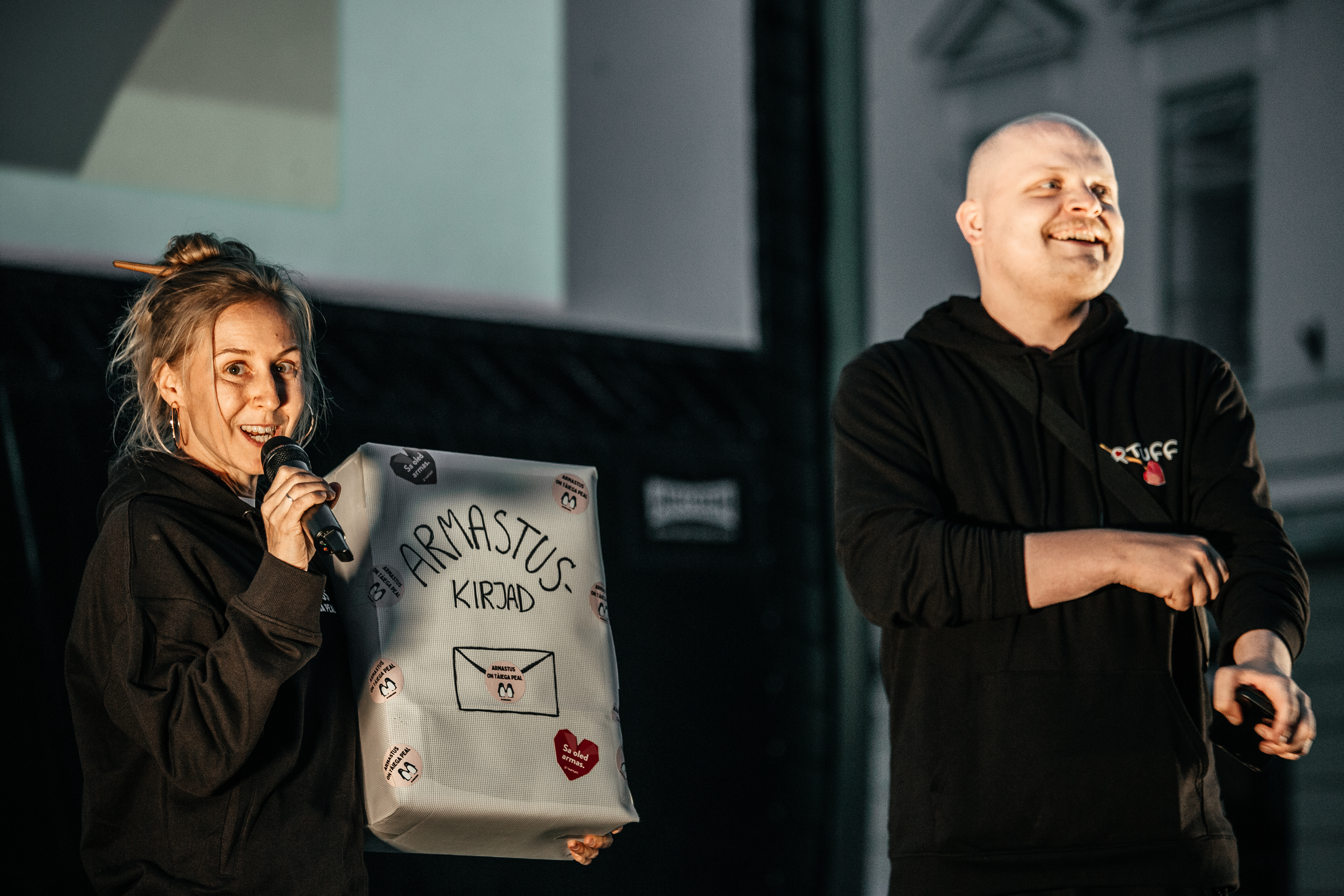
This role is particularly evident at TARTUFF, whose programme includes open-air screenings. It is not enough to choose a film that seems interesting in its own right. The team must also consider how it will work in a particular setting, before an audience that may be entirely different from the one the filmmaker originally imagined.
Heinrich explains that the team watches a large number of films before deciding which ones are suitable for an open-air cinema. Could someone walking past happen upon a screening and become interested, even if the film has already started? Would the audience want to stay until the end if it began to rain?
These are not merely practical considerations. They shape the way cinema exists beyond the conventional theatre.
Story and Visual Language
What matters more in a film: a compelling story or an expressive visual form? For Heinrich, it is not a choice between the two.
“I think the most important thing is still the story itself,” he says.
Yet a story does not exist in isolation. The context surrounding a film can give audiences a key to understanding it, helping them recognise hidden meanings, explore the filmmaker's intentions, and see what unfolds on screen from a different perspective.
Heinrich therefore considers both the film itself and the context that helps us interpret it important. But context cannot always be provided or explained in advance. In those cases, the film must be able to communicate the filmmaker's message through its own story.
There is a meaningful balance in this view. Cinema does not have to explain every detail, but its form, narrative, and meaning should remain connected. Ideally, the audience does not simply watch a film, but enters into a dialogue with it.
Why Share a Film?
Not every film worth watching needs to address a major social issue. Sometimes the reason is much simpler: a film moves or delights us so much that we want to share it with others.
Heinrich expresses this idea through a familiar saying:
“If shared sorrow is half the sorrow, shared joy is double the joy.”
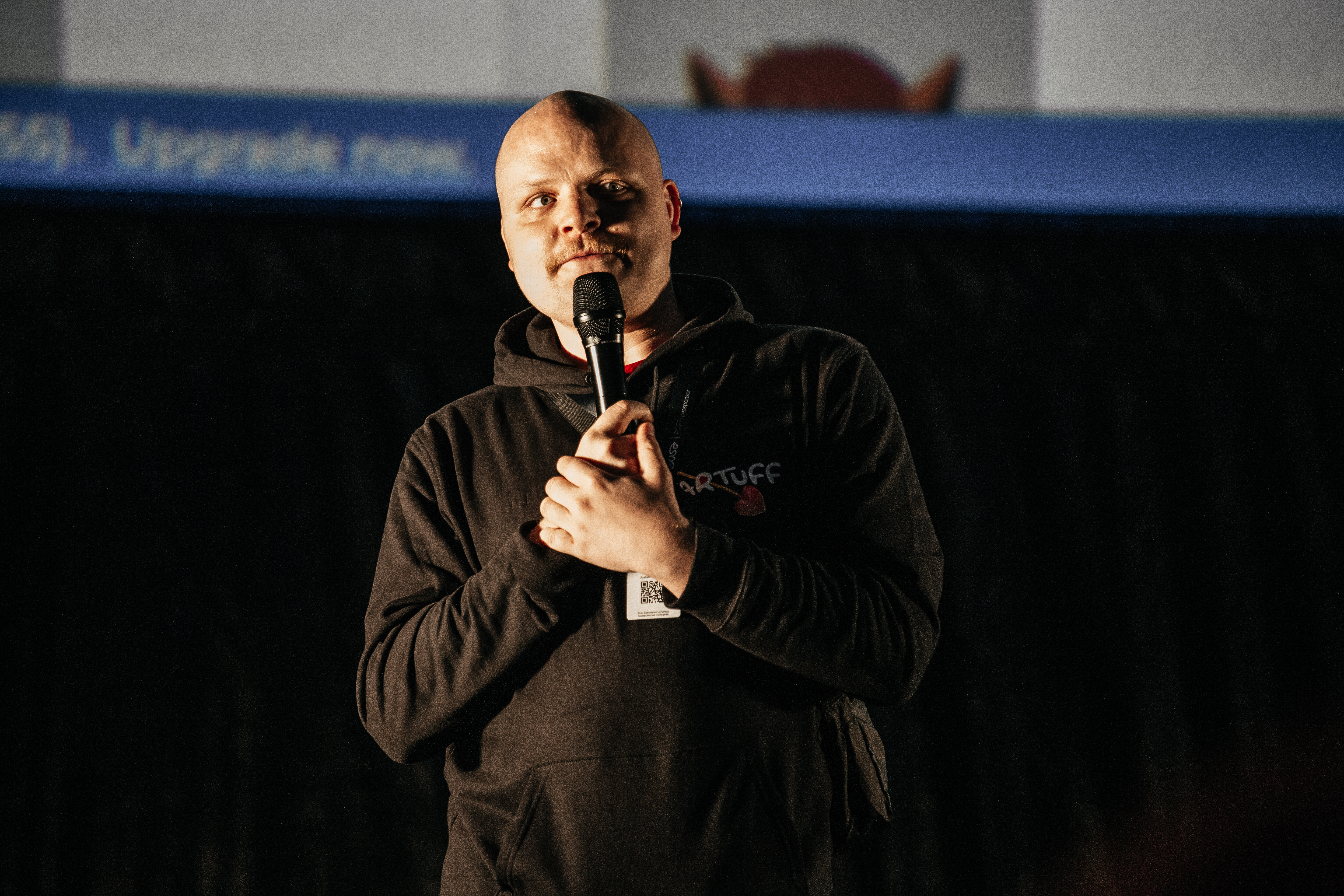
Perhaps this is one of the most important functions of a film festival. It creates the possibility of a shared experience. People who might never otherwise meet find themselves in front of the same screen, watching the same story.
At the same time, a film's wider social relevance matters. If it addresses an issue that affects society or brings an overlooked problem to light, that can be a compelling reason to show it to a broader audience.
But sometimes it is enough for a film simply to be good. The desire to share the joy it brings becomes a reason in itself.
Seeing Ourselves Through Someone Else's Eyes
When the conversation turns to Estonian cinema and culture more broadly, Heinrich suggests paying greater attention to stories told by people who are not necessarily ethnic Estonians.
He believes this perspective can open up new ways of seeing. Someone coming from outside a culture may notice things that have become so familiar to those within it that they are no longer visible.
“When someone from the outside helps us show who we are, I find that quite fascinating,” he says.
He is particularly interested in stories about people who have moved to Estonia or come from different national backgrounds—stories about how their lives intertwine with those of the people and communities around them.
Here, cinema becomes not only a way of exploring differences, but also an opportunity to discover common ground. Personal stories can broaden our understanding of national culture, presenting it not as something fixed and homogeneous, but as a space shaped by encounters, migration, and shared experience.
From this perspective, another person's point of view does not have to oppose our own. On the contrary, it may help us understand ourselves better.
Stories Yet to Be Told
Although Heinrich has no immediate plans to make films himself, he has plenty of creative ideas. Recently, he wrote a musical originally intended for the stage. As he worked on it, another possibility occurred to him: perhaps the story could also become a film.
“I don't know how good the musical is, but I thought it could make quite an interesting film,” he says.
He prefers not to reveal his other ideas just yet. And that seems entirely fitting for the creative process: not every idea needs to be made public immediately, and not every story knows its final form from the beginning.
Perhaps this is why his reflections on cinema keep returning to the same subject: the story, and its encounter with another person. Sometimes a film helps us make sense of a difficult issue. Sometimes it offers an unexpected perspective on a familiar world. And sometimes we simply want to share the experience it has given us.
For Heinrich Sepp, a film festival is a place where such encounters become possible—a place where filmmakers have the opportunity to be heard and audiences can discover something that stays with them long after the screen goes dark.
This article is based on an interview conducted by HERZ HOUSE with Heinrich Sepp.